


Conventional reverse osmosis (RO) systems often face operational challenges such as membrane fouling, high operating pressure, frequent chemical cleaning, and membrane replacement. Over time, the combined costs of energy consumption, chemicals, maintenance, labor, and production downtime can significantly increase overall operation and maintenance (O&M) expenses.
H2MO’s proprietary Bio-Programmable Membrane (BPM) technology is designed to address these challenges through innovations in membrane materials, membrane configuration, and integrated system design. Together, these advancements help reduce energy consumption, simplify maintenance, minimize cleaning requirements, and extend membrane service life. Depending on the application and operating conditions, BPM-based systems can reduce overall O&M costs by approximately 15% - 40%
1.Bio-Programmable Membrane Layer – Reducing Cleaning Costs by Up to 85%
H2MO’s proprietary Bio-Programmable composite membrane technology is designed to optimize membrane surface properties at the molecular level. Its specially engineered surface morphology helps reduce the adhesion and accumulation of contaminants, while the bio-inspired protective layer helps inhibit bacterial and colloidal fouling. The chemically stable membrane structure also provides enhanced resistance to repeated chemical cleaning, supporting longer-term membrane performance.
Combined with the open-flow configuration of the hollow-fiber membrane, effective crossflow helps minimize the deposition and accumulation of contaminants on the membrane surface. This can extend cleaning intervals, reduce the consumption of cleaning chemicals, and lower associated labor and wastewater disposal costs, while also minimizing operational downtime.
Together, these features can reduce cleaning-related costs by up to 85% and extend membrane service life by more than 30%, depending on feedwater quality and operating conditions.
2. High-Flux Hollow-Fiber Configuration – Reducing Energy Consumption by 40% - 75%
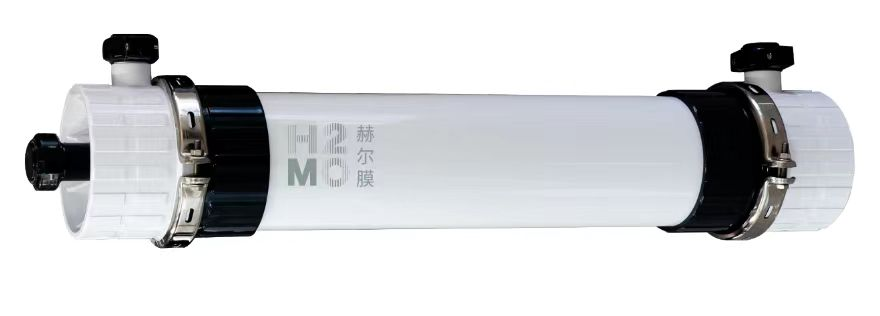
The hollow-fiber configuration provides a large effective membrane area, enabling 1.8–3 times higher water flux compared with conventional membrane elements. The BW-ES-8040E delivers a rated water output of up to 39 m³/day per element, while the BW-ES-8040H delivers up to 36 m³/day per element. The higher productivity can reduce the number of membrane elements required to achieve the same overall treatment capacity.
Designed for low-pressure operation, the membrane modules operate within a pressure range of approximately 2.0–7.0 bar. This significantly reduces the pressure and power requirements of the pumping system, contributing to overall energy savings of approximately 40%–75%, depending on feedwater conditions and system configuration.
The membrane’s enhanced fouling resistance also helps limit the increase in operating pressure over time, supporting more stable energy consumption and reducing the need for frequent cleaning and maintenance. The two primary membrane models achieve rejection rates of up to 99.0% and 99.2%, respectively, helping maintain consistent permeate water quality and extend membrane service life.
3. Easy-Maintenance, Retrofit-Friendly Design – Reducing Maintenance and Upgrade Costs
Individual membrane housing: Each membrane element can be inspected and replaced independently, avoiding the need to replace an entire membrane bank when only one element requires attention. This helps reduce maintenance time, labor requirements, and replacement costs.
Standard 8040 dimensions: The membrane element is designed around the widely used 8040 format, supporting compatibility with many conventional spiral-wound RO installations. In suitable existing systems, this can reduce or eliminate the need for major modifications to pressure vessels and piping, helping keep retrofit costs to a minimum.
Stable long-term operation: The combination of low-pressure operation and enhanced fouling resistance helps slow membrane performance degradation, extend service intervals, and reduce the frequency of membrane replacement, lowering long-term maintenance and replacement expenditure.
4. BPM-RO Intelligent Integrated System – Simplifying Operation and Reducing O&M Workload
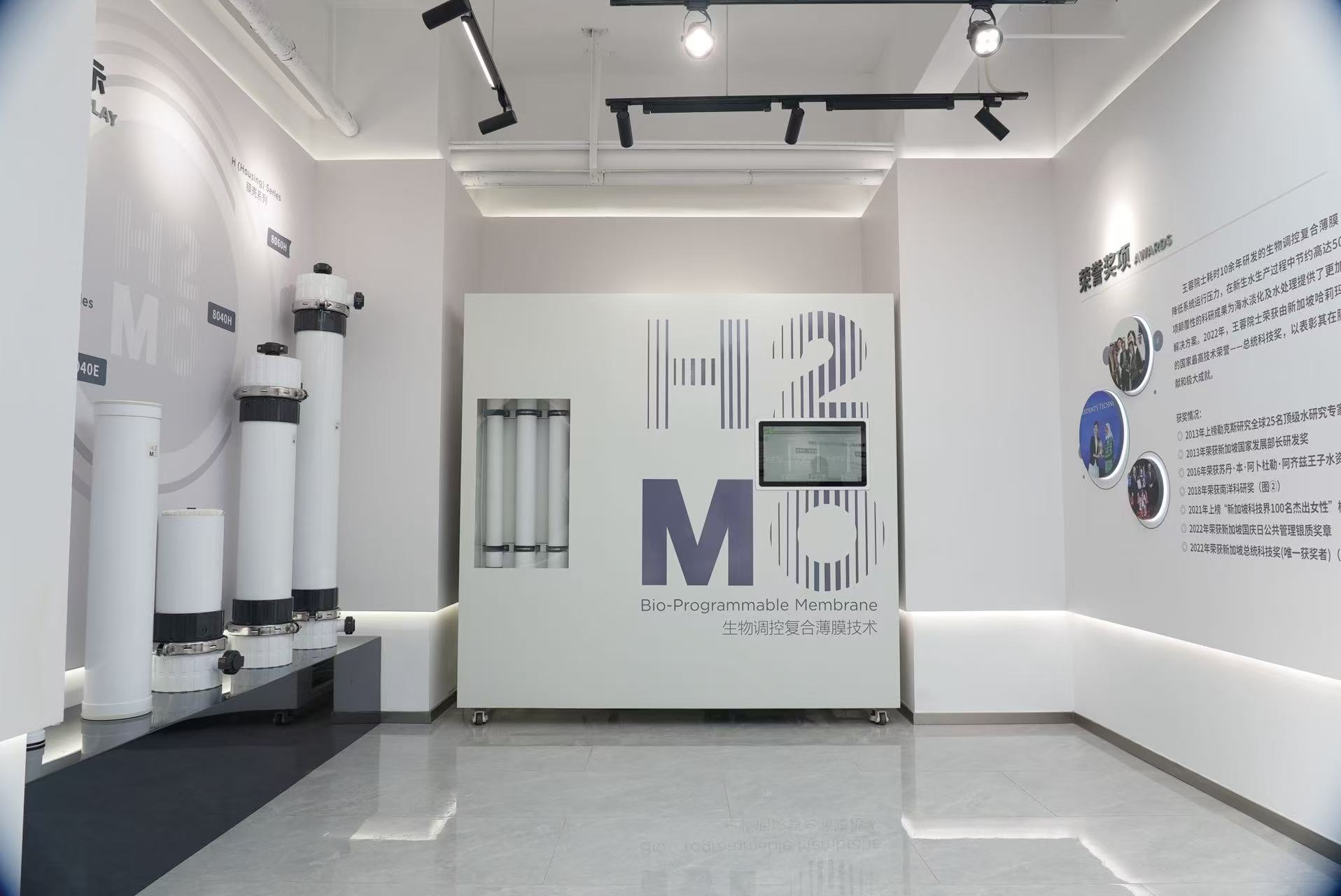
The BPM-RO integrated system combines membrane treatment, process control, and monitoring in a compact, pre-engineered unit designed to simplify day-to-day operation and maintenance.
Automated monitoring and control: An industrial touchscreen interface and PLC-based control system provide real-time operating data, automated flushing, and differential-pressure alerts, helping reduce the need for routine manual inspection.
Enclosed, low-noise design: The fully enclosed cabinet helps reduce operating noise, while integrated observation windows allow operators to visually inspect key components and membrane operating conditions.
Hygienic modular piping: Internal piping uses materials such as UPVC and stainless steel, with a modular layout designed to minimize dead zones, support cleaner operation, and simplify maintenance.
Simplified installation and commissioning: The unit is pre-assembled prior to delivery, reducing on-site installation requirements. Once the necessary water and power connections are completed, the system can be commissioned with minimal additional construction work.
High water recovery: The system can achieve a water recovery rate of up to 80%, helping reduce feedwater consumption and the volume of wastewater requiring further treatment or disposal.
5. Broad Application Flexibility – Reducing Lifecycle Costs Across Diverse Water Treatment Applications
BPM technology can be applied across a wide range of water treatment applications, including ultrapure water production for biopharmaceutical facilities, high-purity water for electronics manufacturing, municipal water treatment, commercial drinking water systems, industrial wastewater recovery and reuse, concentration and separation processes, and the upgrading of existing pure-water treatment facilities. Its low-energy and fouling-resistant characteristics can be particularly beneficial in applications involving challenging feedwater quality or high contaminant loading.
When evaluating water treatment systems, the initial equipment cost is only one part of the overall economic picture. Long-term energy consumption, chemical usage, maintenance requirements, membrane replacement, labor, and downtime can have a significant impact on total lifecycle cost.
By combining BPM membrane materials, hollow-fiber membrane architecture, and intelligent integrated system design, H2MO’s BPM technology is designed to address three major operational challenges associated with conventional reverse osmosis systems: high energy consumption, frequent cleaning, and limited membrane service life.
The result is a new generation of membrane-based water treatment solutions focused on lower carbon emissions, reduced lifecycle costs, simplified operation, and improved long-term efficiency.